Gossip & Chatter
 Gossip & Chatter
The nine Nazgûl: Patsy checks the shadowy guest list
About 9 minutes to read
Spoiler warning: I discuss the origins of the Ringwraiths, events in The Lord of the Rings including its ending, and officially announced material from the third season of The Rings of Power.
Dear Butterfolk, nine mysterious figures, nine rings and no usable guest list: that is an outrage for a reporter. After all, I want to know whom not to invite for mead. “The one in black” is an inadequate description when nine gentlemen have agreed on the same wardrobe.
My starting point is a MeinMMO article about the origins of the Nazgûl. Here it pays to keep a second parchment beside the first: one for Tolkien, one for the screen adaptation. Otherwise a series detail quickly turns into a supposed entry in the old history book.
My first finding: the Nine were Men
In Tolkien, the Nazgûl were not shadow beings created that way from the beginning. They were nine mortal Men to whom Sauron gave Rings of Power. The rings granted them power and unnaturally prolonged their lives. Their bearers became mighty: kings, sorcerers and warriors.
But I will not turn that into a claim that all nine were already standing in a row as crowned kings when the rings were handed over. The brief account describes their greatness and power; it does not provide nine complete biographies.
Dependence came with the rings. Their bearers gradually fell under the dominion of Sauron and the One Ring. Their visible forms faded until they became Ringwraiths. The process did not simply run to the same stopwatch for everyone: their own strength and will played a part.
For me, becoming invisible is not even the most frightening aspect. What horrifies me is the idea of continuing to exist for longer and longer while having less and less control over yourself. A gift that ends up owning its recipient belongs on nobody’s wish list. Not even beside the particularly expensive sweetrolls.

My list of names remains remarkably short
The most important answer to “Who were the Nine?” is unfortunately: we do not know for most of them.
Khamûl is the only Nazgûl for whom Tolkien gives a personal name.
This does not mean: that his whole earlier life is known.
Their leader is known as the Witch-king of Angmar.
This does not mean: that “Witch-king” was his birth name.
Three of the Nine were great lords of Númenórean origin.
This does not mean: that we can reliably identify all three with particular Ringwraiths.
“The Hunt for the Ring” in Unfinished Tales gives information about Khamûl.
This does not mean: that every later game biography also comes from Tolkien.
Khamûl is known as the Black Easterling or Shadow of the East and ranks immediately below the leader of the Nine. With so little firmly established history, I prefer to leave out an elaborate childhood, an alleged kingdom and a tragic family story. If I fill the gap with my imagination, I might produce a lovely story — but not a new Tolkien fact.
Something similar applies to the Witch-king. We know his role, wars and terror far better than his former name. His origins in Númenor are often suspected; I would still not sell that as a conclusively established identity.
And the other seven? My quill should not pretend it has secretly found Sauron’s personnel files either.
My timeline needs more room than a television episode
The book chronology places the first appearance of the Ringwraiths in 2251 of the Second Age. That is an entry about their appearance in history, not a complete record of when each one received a ring or exactly when his last ordinary human concern disappeared.
In the Third Age, their leader establishes the realm of Angmar and wages war against the successor kingdoms of Arnor. Later, Minas Ithil is captured in 2002 of the Third Age after a two-year siege and becomes Minas Morgul. This is not an accidentally gloomy name change, but the visible expression of a change in power.
For me, that long history explains why the Nine are more than nine pursuers on black horses. They act as Sauron’s instruments for centuries. If you picture only their ride through the Shire, you see a particularly close and terrifying episode, not the beginning of their careers.
Nevertheless, I shall spare you a list of every date between Eregion and Mount Doom. A reference sheet should help understanding, not require you to train a second quill first.
My list of Black Riders is not a list of dragons
Nazgûl means the Ringwraiths themselves. Even when they later ride winged creatures, that does not make the mount another Nazgûl. The distinction is small but extremely useful when a conversation suddenly claims that nine men became nine flying dragons.
Nor does invisibility mean that the Nine can no longer act. They wear clothing, use weapons and fill living beings with paralysing fear. That fear is one of their most important weapons. Their terror is not simply a matter of how sharp a blade looks.
In the end, the Witch-king falls on the Pelennor Fields to Éowyn, with crucial help from Merry. Leaving out the Hobbit would be not only poor research but a personal insult to my entire profession of underestimated little people. The remaining eight perish with the end of the One Ring.
My series parchment gets a heading of its own
Now to the current occasion, clearly separated from Tolkien’s book history: Amazon’s Sauron article, updated on 5 November 2026, announces the third season’s launch for 11 November 2026. It specifies four episodes initially, followed by further episodes on 18 and 25 November.
It really does use the term “Nazgnagôl”, explained as “ring-servants”. Amazon uses it for Sauron’s ring servants, who will be further corrupted by their rings and eventually become the familiar Nazgûl.
For my parchment, that means: the term is documented in the current series announcement. I treat it here as terminology from this adaptation, not as a verified general Tolkien term for a precisely defined intermediate stage. Likewise, Amazon’s announced storyline does not add to Tolkien’s original personnel records.
How the announced episodes portray the individual bearers and tell their transformation remains open until release. I am particularly interested in whether people with choices of their own remain recognisable behind the future shadows.
My caution over nine suspiciously complete biographies
Games and other adaptations give the unknown Ringwraiths additional names, titles and backstories. That can make perfect sense for the particular story. It answers a different question, though: “Who are they in this version?” rather than “What did Tolkien establish about them?”
Tolkien Gateway separates such portrayals from the book account in a dedicated adaptations section. That is precisely what I would watch for when looking things up. A long list of names looks wonderfully official on parchment. Its length is not proof of its origin.
My little reader’s trick consists of three questions:
- Is a specific Tolkien text cited as the basis?
- Does the information appear under book history or under an adaptation?
- Is a theory recognisably presented as a theory?
That does not make every open question disappear. But it prevents them from secretly turning into certainties.
My conclusion: nine rings do not make nine complete profiles
What I take away is this: the Nine were Men. Power and prolonged life became servitude. Khamûl has a recorded personal name; the Witch-king is known through his title and deeds. In the book account, the other biographies remain largely in darkness.
For me, those gaps do not lessen their horror. Behind the Riders were once people whose own will eventually counted for almost nothing. That does not require a dramatic family tree for every one of them.
I shall therefore stick to mead, quill and jewellery that does not order me to Mordor. Sauron’s gift policy: zero out of five sweetrolls. The open question of who all these people were before their downfall, however, deserves more than a hastily invented answer.
Your Patsy Wackelwitz, with two separate parchments and a decidedly ring-free provisions plan
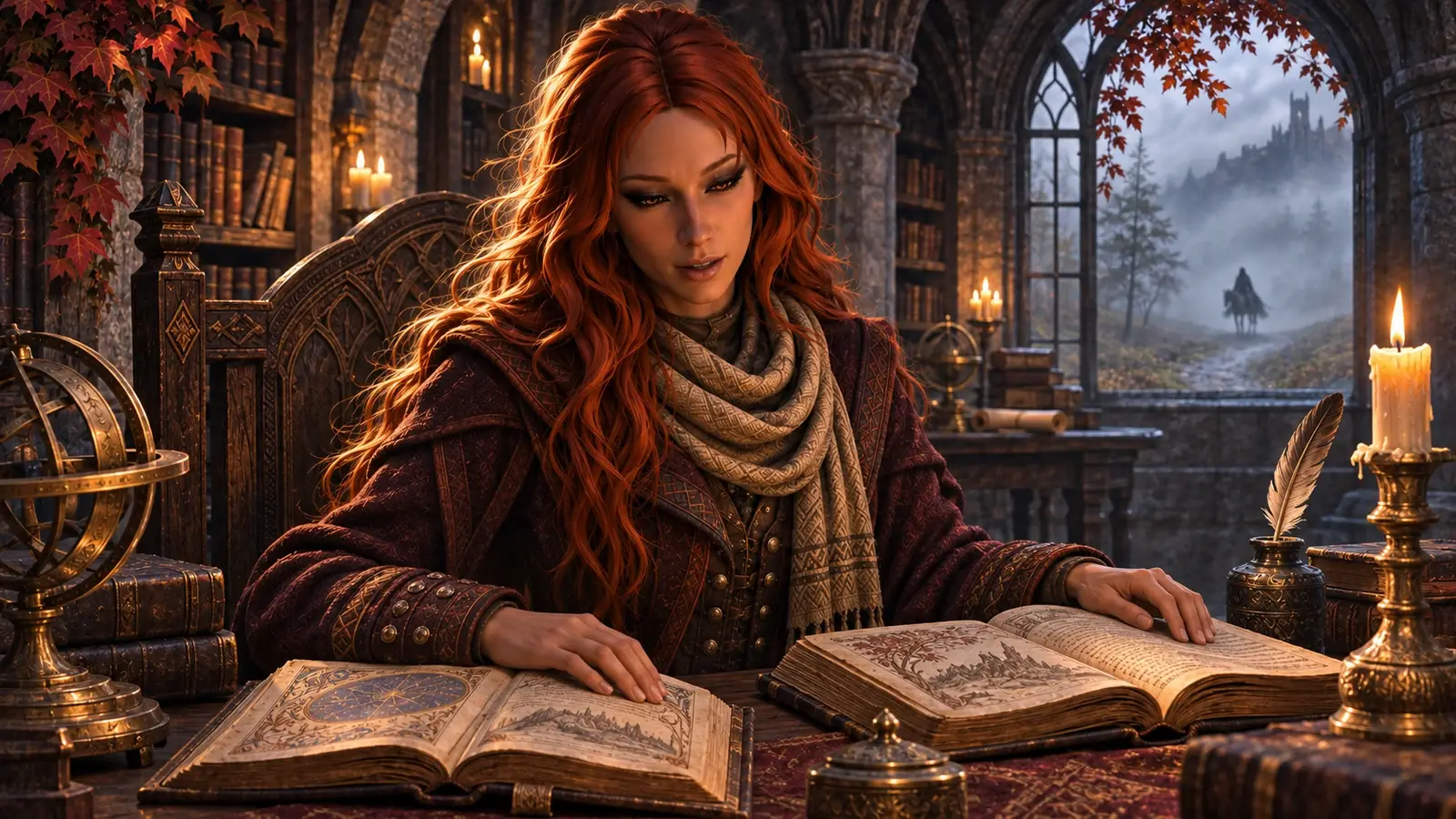
Patsy Wackelwitz is a fictional character. Text created with AI assistance and editorially reviewed; images are imagined AI illustrations, not game screenshots or series stills.
My sources
- MeinMMO: The Rings of Power — Who are the Nazgûl and why do they serve Sauron?, 5 November 2026 — journalistic starting point, not the sole evidence for the series information; article in German.
- About Amazon: Who is Sauron? What to know about The Rings of Power Season 3 villain — the provider’s primary source for its series announcement; updated on 5 November 2026 according to the page. Supports the announced launch and its use of “Nazgnagôl”.
- Tolkien Gateway: Nazgûl — editorially maintained community encyclopaedia, not an official Tolkien site; extensively supported by book references and with a separate adaptations section. Basis for the lore overview and the distinction between book history and game additions.
Further book passages following Tolkien Gateway’s references: The Silmarillion, particularly “Of the Rings of Power and the Third Age” and “Akallabêth”; The Lord of the Rings, Appendices A/B and the Pelennor and Mount Doom chapters; Unfinished Tales, “The Hunt for the Ring”.
More stories worth a read
The One Ring comes to cinemas and Germany misses out
Episode seven of the third season of The Lord of the Rings: The Rings of Power is coming to cinemas on 23 November 2026. Germany is missing from the list. Screenings in …
Read more : The One Ring comes to cinemas and Germany misses out
Middle-earth gossip: Elijah Wood recognises Frodo’s feet again
Sometimes a piece of news isn’t finished the first time around. That is a strange thought if you dwell on it. Surely a news story ought to be done eventually, like a …
Read more : Middle-earth gossip: Elijah Wood recognises Frodo’s feet again
Middle-earth gossip: The Rings of Power season 3 is here
It is happening: the first four episodes of season 3 of “The Lord of the Rings: The Rings of Power” have been available on Prime Video since 11 November 2026. Let me …
Read more : Middle-earth gossip: The Rings of Power season 3 is here